Türkçe
 English

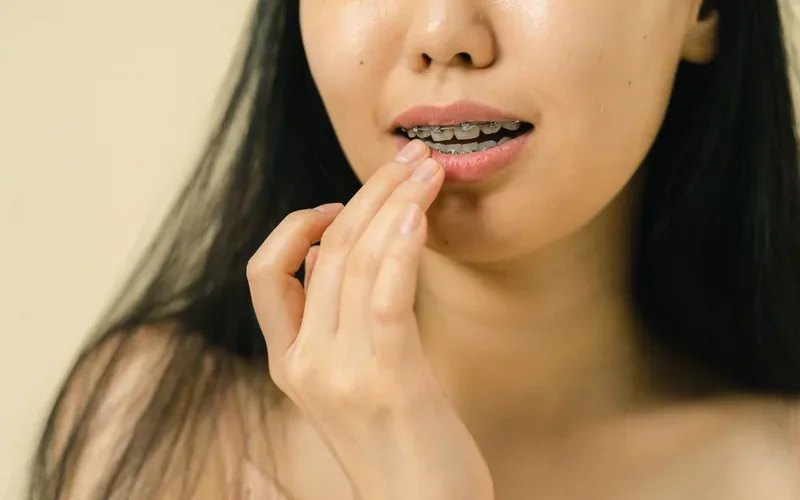
Orthodontics is the dental specialty that diagnoses and treats crowding in the teeth, skeletal discrepancies between the jawbones, and bite disorders (malocclusion). Braces (fixed orthodontic treatment) applications are a comprehensive biomechanical rehabilitation process that, beyond aesthetic concerns, aims to protect the patient's chewing function, speech (phonation) ability, and long-term joint (TMJ) health.
Teeth are not directly fused to the jawbone; they are attached to the bone socket (alveolus) by a microscopic network of fibers called the "periodontal ligament." The basis of orthodontic treatment is the application of continuous and light force to this network of fibers.
When force is transmitted to the tooth through brackets (attachments bonded to the teeth) and archwires (the main force-producing element), bone tissue breakdown (resorption) begins on the side in the direction of movement, while new bone formation (apposition) begins on the opposite side. This cellular adaptation process takes an average of 3-4 weeks. For this reason, the biological rationale for monthly orthodontic check-ups is to allow the physiological time needed for bone tissue remodeling.
In clinical practice, fixed orthodontic treatment consists of sequential stages with specific biomechanical goals:
Leveling and Alignment: This is the first stage of treatment. Using very flexible and memory-based nickel-titanium (NiTi) wires, the goal is to level the teeth in the vertical and horizontal planes and resolve crowding.
Working Stage (Correction of the Bite): After the teeth have been aligned, harder stainless steel wires are used. At this stage, extraction spaces are closed and the occlusion (bite) relationship between the upper and lower jaws is corrected. This is often the period when the patient needs to use elastics.
Finishing (Detailing and Finishing): This is the final precision-adjustment phase, during which root parallelism is achieved, the bite is set in millimeter-perfect alignment, and each tooth is brought to its ideal position.
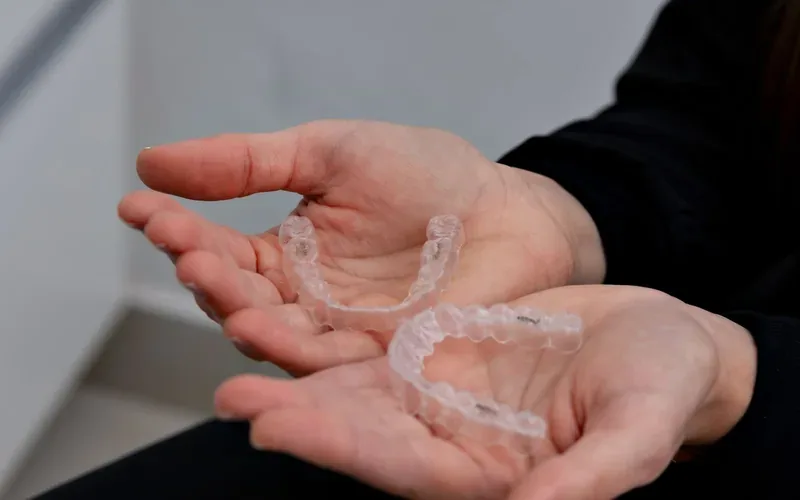
Retention: This begins after active treatment ends and the wires are removed. To allow the bone tissue to fully harden and prevent the teeth from returning to their прежvious positions (relapse), fixed retainer wires are bonded to the back surfaces of the teeth or clear aligners are used.
Different bracket systems may be preferred depending on the patient's clinical condition and aesthetic expectations.
Metal Brackets: They have the lowest coefficient of friction, the highest mechanical resistance, and are traditionally the most commonly used system. They provide the doctor with maximum control in treatment management.
Porcelain (Aesthetic) Brackets: Because they are tooth-colored, they are less noticeable. However, compared with metal brackets, they are more fragile and, because their coefficient of friction is higher, they may slightly extend treatment time.
Self-Ligating Brackets: These systems have their own locking mechanism and do not require elastic ligatures (O-rings) to attach the wire to the bracket. Because they reduce friction, they provide a more comfortable movement in the initial stages.
The success of orthodontic treatment depends on the patient's compliance as much as on the biomechanics applied by the doctor. Brackets and wires create retention areas for food buildup. Inadequate oral hygiene leads to gingivitis and decalcification on the tooth surface (white spot lesions - early cavities). It is an integral part of the clinical protocol for patients to perform thorough mechanical cleaning after every meal using an orthodontic toothbrush and an interdental brush, and to avoid acidic drinks as well as hard/sticky foods.
Let us take a look together and go over your treatment options. Feel free to call us with any questions.