Türkçe
 English


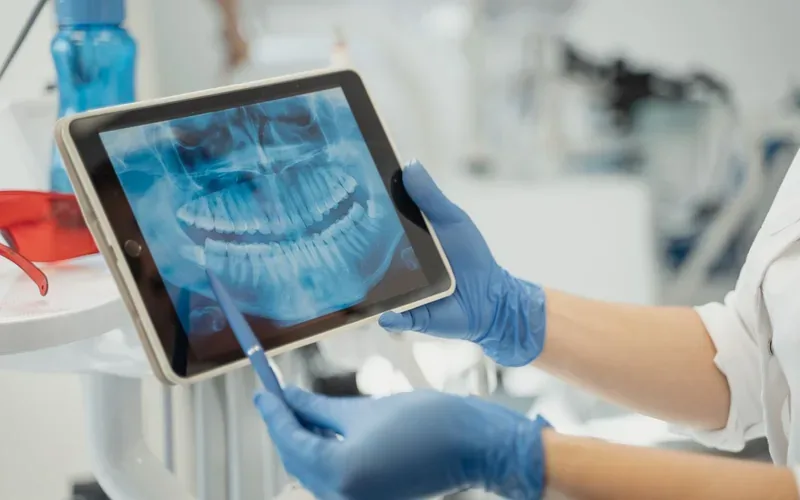
In our clinical practice, the most fundamental and critical protective procedure that keeps a tooth in the mouth without extraction is root canal treatment (endodontic treatment). It is performed in cases where the pulp tissue (the nerve and blood vessel bundle) located in the innermost part of the tooth has been irreversibly damaged for various reasons. The main goal of treatment is to completely remove infected tissues from the tooth's root canals, disinfect the canals, and fill them hermetically to create a basis for biological healing.
Protected by the enamel and dentin layers, the pulp is highly isolated from external factors. However, when this barrier is breached, root canal treatment becomes inevitable. The main clinical scenarios in which we decide to intervene are as follows:
Deep Caries: Microbial destruction in the tooth tissue reaches the pulp chamber and infects the nerve tissue (pulpitis).
Mechanical or Thermal Trauma: Loss of pulp vitality as a result of severe impact (fall, collision) and subsequent tissue necrosis (death).
Repeated Restorations: The cumulative stress created on the pulp by repeated deep fillings or preparation procedures on the same tooth.
Periodontal-Endodontic Lesions: In advanced gum disease, bacteria seep into the tooth from the root tip (apex), causing infection.
Root canal treatment is based on biomechanical cleaning and three-dimensional sealing principles. The process generally proceeds through the following stages under local anesthesia:
Access Cavity Preparation: After the decayed tissue is completely removed, the pulp chamber is reached and the infected nerve tissue (coronal pulp) is removed.
Instrumentation of the Root Canals: The microchannels extending from the pulp chamber to the root tip are mechanically widened and shaped using special titanium files. At this stage, all dead tissues and the bacterial biofilm layer inside the tooth are scraped away.
Chemical Disinfection: Mechanical cleaning alone is not sufficient. The inside of the canals is repeatedly irrigated with strong antimicrobial solutions such as sodium hypochlorite (NaOCl) and EDTA to achieve chemical sterilization.
Filling the Canal (Obturation): The cleaned and dried empty canals are filled all the way to the root tip without leaving any air space (hermetically) using "gutta-percha" and special canal sealers, which are biocompatible materials. This procedure prevents bacteria from leaking back into the canal.
After the procedure, once the anesthesia wears off, mild sensitivity to touch or during chewing that may last for a few days is a physiologically expected condition. Analgesics (painkillers) prescribed during this period provide comfort.
Since the nerve tissue of a tooth that has undergone root canal treatment is removed, the tooth no longer senses thermal stimuli such as hot and cold; however, because the periodontal fibers connecting the tooth to the jawbone remain alive, the tooth continues chewing function just like a healthy tooth. Since there is a risk that a tooth whose nerve has been removed may gradually lose flexibility and become brittle, full ceramic or zirconia crowns are generally preferred as the final restoration to support the tooth's structural integrity.
Let us take a look together and go over your treatment options. Feel free to call us with any questions.