Find scientific and objective information here about Bursa root canal treatment (endodontic treatment) procedures, toothache symptoms, and clinical procedure processes.
Oral health is an inseparable part of overall bodily integrity and quality of life. Thanks to advances in dentistry, many dental diseases that in the past might have ended in extraction can now be treated and preserved in the mouth. At the forefront of these treatments are endodontic treatments, commonly known as "nerve removal." If you are experiencing severe tooth-related pain and are looking for medical, objective, and detailed information about Bursa root canal treatment processes, this guide will help you understand the procedure step by step.
This article has been prepared in accordance with health information regulations, with the aim of informing the public about what root canal treatment is, in which cases it is applied, and its clinical stages.
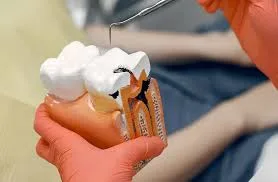
To understand the logic of root canal treatment, it is first necessary to have a basic understanding of the anatomical structure of the tooth. Our tooth consists of three main layers from the outside to the inside:
Enamel Layer: The outermost part of the tooth and the hardest tissue in the body. It does not contain a nerve network.
Dentin Layer: The layer located just beneath the enamel, which is more yellowish in color and contains fine canals. It provides the tooth with flexibility.
Pulp (Tooth Pulp): The soft tissue located in the innermost part of the tooth, in the cavity extending to the root tip. It consists of blood vessels, nerve networks, and connective tissue. This is the center that обеспечивает the vitality of the tooth and controls its nourishment and development.
Root canal treatment is a medical intervention used when the pulp tissue in this innermost part has been damaged, inflamed, or lost its vitality.
In a healthy tooth, the enamel and dentin layers protect the pulp inside from external factors and bacteria. However, when this protective shield is breached for various reasons, bacteria reach the pulp chamber and cause infection. The main conditions that require a tooth to undergo root canal treatment (endodontic treatment) are as follows:
Deep Cavities: Superficial cavities that are not treated in time progress and pass through the enamel and dentin layers. When bacteria reach the pulp tissue, they trigger irreversible inflammation there.
Physical Trauma: Severe impacts to the tooth, such as falls, blows, or sports accidents, can cause the vascular-nerve bundle at the root tip to rupture even if there is no visible fracture in the tooth. The pulp, which can no longer be nourished, eventually loses its vitality (necrosis).
Cracks and Fractures: Deep cracks in the tooth structure create a pathway for bacteria to seep directly into the tooth pulp.
Repeated Procedures: Having multiple deep fillings or crown (cap) procedures performed on the same tooth over the years can cause structural fatigue and sensitivity in the pulp tissue.
Only a dentist can determine whether a tooth needs endodontic treatment based on a clinical and radiographic (X-ray) examination. However, some clear symptoms that patients may encounter in daily life can indicate that the pulp tissue has been damaged:
Pulsating pain that starts without any stimulus (hot, cold, or chewing), often severe enough to wake a person from sleep at night.
Aching that begins after consuming hot or cold foods and does not go away for a long time.
Swelling in the gum or face around the affected tooth.
Pimple-like formations on the gums that sometimes discharge pus (fistula).
A noticeable color change in the tooth, turning gray or dark yellow.
Severe sensitivity felt during chewing or when the tooth is touched.
If you are experiencing one or more of these symptoms, it is very important to seek medical attention without delay to prevent the infection from spreading to the jawbone.
Endodontic treatments performed in dental clinics in and around Bursa include certain standard steps in accordance with international dentistry protocols. The duration of the procedure may vary depending on the tooth's anatomical structure, the number of roots, and the condition of the infection, and may take one session or several sessions.
The first step of the process is a detailed examination. After intraoral checks, the dentist takes a periapical (showing the root of a single tooth) or panoramic X-ray to examine the extent of the infection, the shape of the root canals, and the surrounding bone tissue.
The widespread belief in society that root canal treatment is a "very painful procedure" does not reflect reality. Before the procedure begins, the tooth and surrounding tissues are completely numbed with local anesthesia. In this way, the patient does not feel any pain during the procedure.
After the tooth is numb, the tooth is isolated with a rubber sheet called a "rubber dam" to prevent bacteria in the saliva from entering the treatment area and to keep the solutions used from spilling into the patient's mouth. Then, a small access opening (cavity) is made from the chewing surface of the tooth to reach the pulp chamber.
This is the most critical stage of the treatment. Using special endodontic files, the dentist completely removes the infected, diseased, or dead tissues inside the root canals. The canals are measured millimeter by millimeter up to the root tip, cleaned, and widened to make them suitable for filling. During this process, various medicinal irrigation solutions are used to disinfect the inside of the canals.
After the infection has been completely removed and the canals shaped, the open spaces must be sealed with a biocompatible material. Usually, a flexible plant-based material called "gutta-percha" and special sealing pastes are used to tightly seal the canals all the way to the root tip. This procedure prevents tissue fluids or bacteria from leaking back into the canals.
After the root canal treatment is completed, the visible crown portion of the tooth in the mouth needs to be restored. Depending on the amount of tooth structure lost, a standard composite filling, an inlay/onlay (porcelain filling), or a crown may be preferred to prevent the tooth from fracturing.
After root canal treatment has been successfully completed, there are some rules the patient should follow to prolong the life of the tooth and support the healing process:
Do not eat anything until the effect of the local anesthetic (numbness) has completely worn off, to avoid biting the lip and cheek.
During the first few days after the procedure, especially during chewing, mild sensitivity or tenderness in the tooth is medically expected and normal. As healing in the surrounding tissues is completed, this sensation will disappear.
Painkillers or, if deemed necessary, antibiotics prescribed by your dentist should be taken exactly on time and at the recommended dose.
If you are undergoing treatment in sessions, you should avoid chewing hard-shelled or sticky foods in the area where the tooth is located between sessions. Since there will be a temporary filling on the tooth, the risk of fracture is high.
Continue brushing your teeth twice a day and maintaining interproximal cleaning routines (dental floss/interdental brush) without interruption. The notion that a tooth treated with root canal treatment will not decay is incorrect; although the tooth's internal structure has been cleaned, problems related to plaque buildup on the outer enamel may still occur.
General dentists can successfully perform root canal treatments. However, dentists who have completed specialist or doctoral training in the department of endodontics after graduating from dental school are called "Endodontists." Teeth with excessively curved roots, retreatment of previously failed treatments, or anatomically complex cases are generally managed by dentists specialized in this field.
Protecting your own tooth is one of the best health investments you can make. In the face of progressing infections, tooth extraction should generally be the last resort. A root canal treatment performed with the correct indication and in accordance with biological principles, when supported by good oral hygiene, can allow your tooth to serve you for a lifetime.
This page content has been prepared solely to inform the public about oral and dental health, within the framework of the rules of the Regulation on Promotional and Informational Activities in Health Services and the Law No. 1219 on the Practice of Medicine and Branches of Art, enacted by the Ministry of Health. The information provided herein cannot be used in any way for the diagnosis or treatment of diseases, does not include any guarantee of results, and is not intended for commercial direction. To have your symptoms evaluated and to receive the correct treatment plan tailored to you, you must consult a dentist directly and undergo an examination.
Let us take a look together and go over your treatment options. Feel free to call us with any questions.
 Türkçe
 English